
AI FOR NOT-FOR-PROFITS & CHARITIES
Grant first drafts from your own answer bank, acquittals assembled from program records, same-day donor receipts, volunteer onboarding and a cleaner CRM, with a named person signing off everything a funder, donor or client sees.
EXAMPLE ONLY · NOT A REAL CHARITY OR FUNDER
- WK 1Guidelines turned into a checklistCriteria, word limits, eligibility questions and attachments pulled out… GRANTS LEAD CONFIRMS THE FIT
- WK 2First draft from your answer bankEach criterion answered from past applications and program data, gaps marked… WRITER REWRITES IN YOUR VOICE
- WK 3Budget lines checkedFigures matched to the accounts and the funder's cost rules… FINANCE OFFICER SIGNS OFF
- MTH 12Acquittal draftedOutputs from program records, spend from the ledger, variances listed… CEO CHECKS AND CERTIFIES
NEVER DECIDED BY THE SYSTEM
What you promise, claim or certify to a funder
the system drafts · your people decide what you promise
001 / THE SHORT ANSWER
AI helps a not-for-profit most with first drafts and data shuffling: grant applications, acquittals, donor receipts, volunteer admin, CRM clean-up and board papers. It shouldn't decide who gets a service, what you promise a funder or who is cleared to work with vulnerable people.
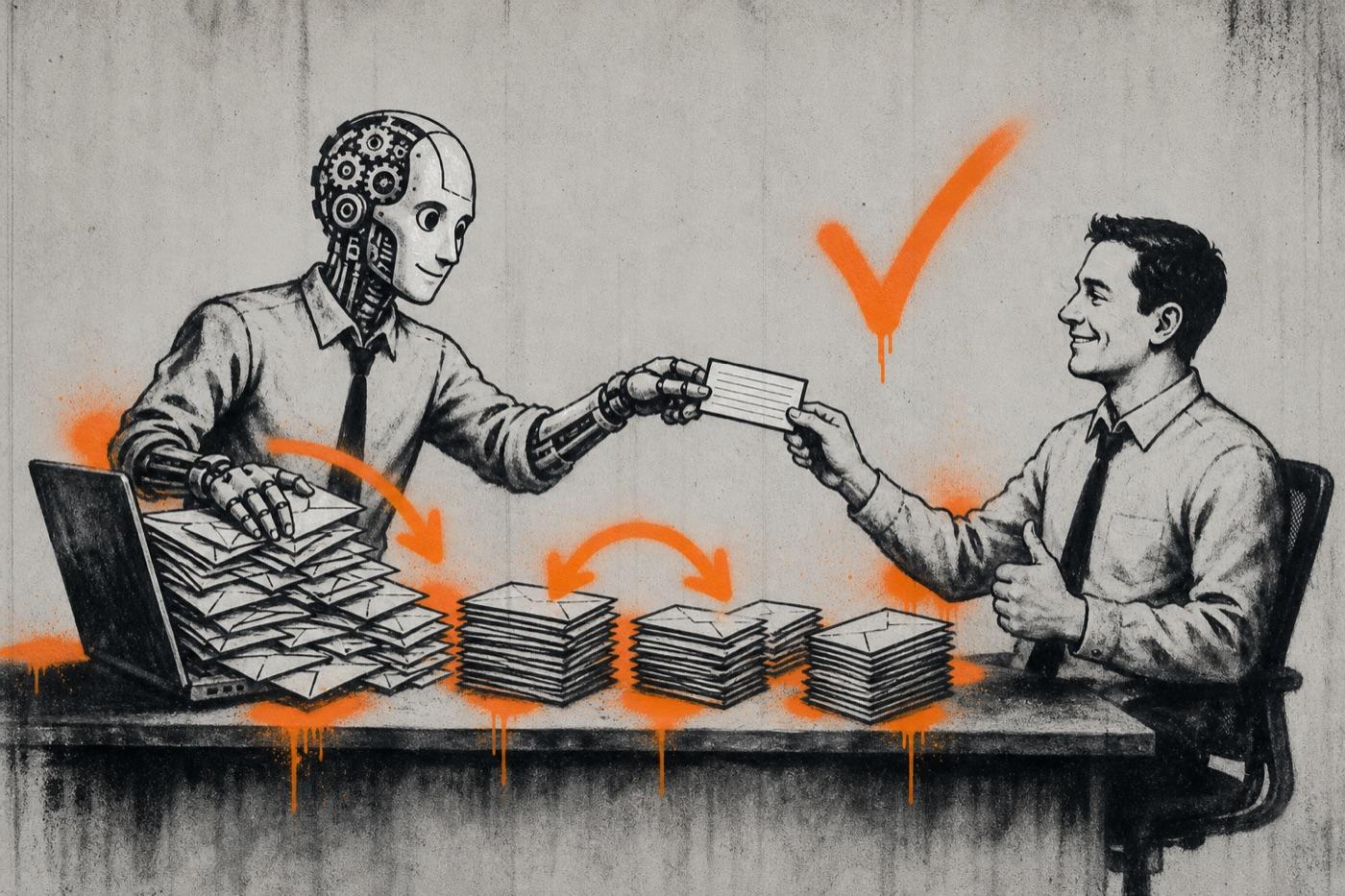
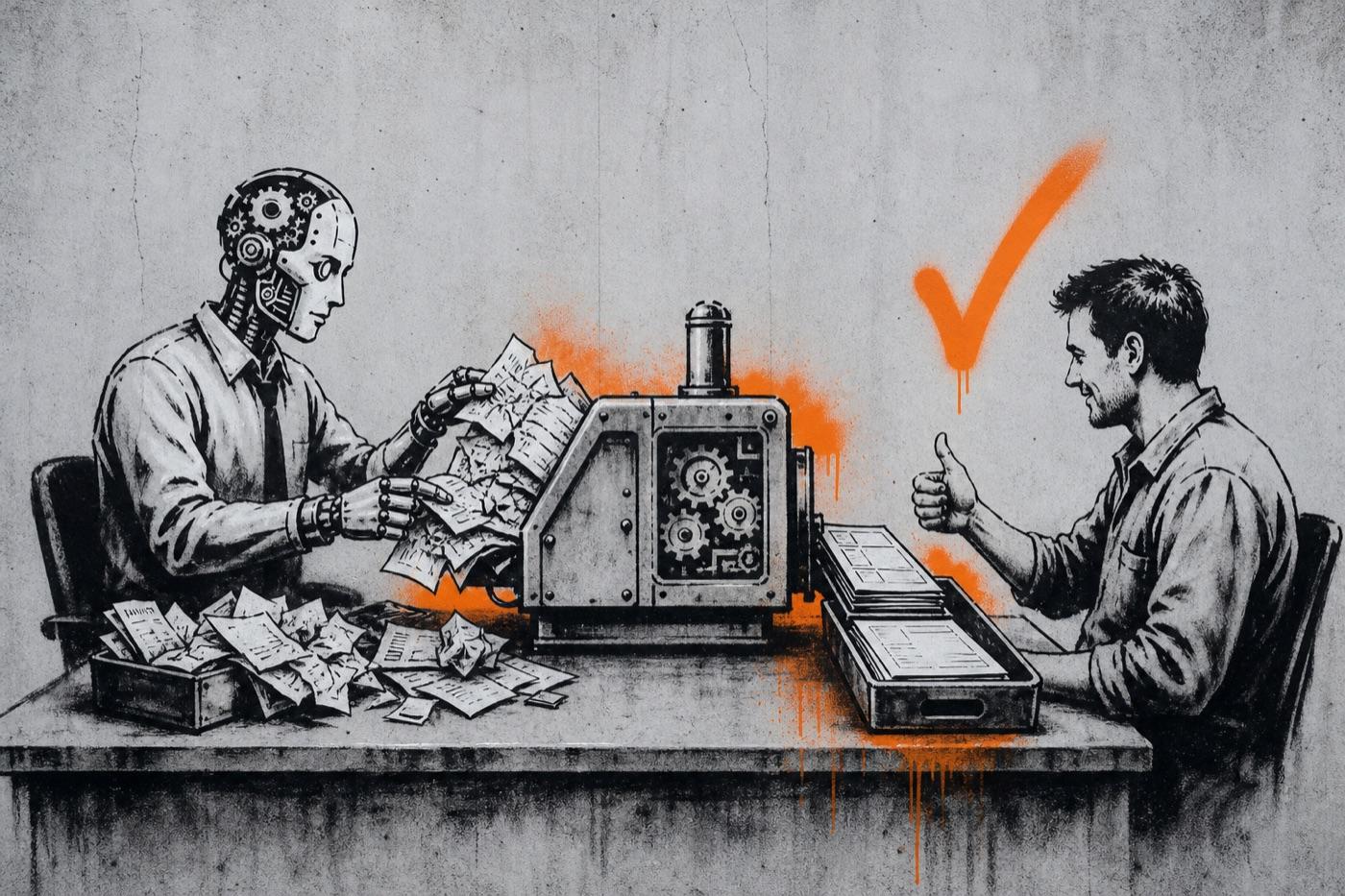
The rule we build to: the system reads, matches and drafts, and a named person approves anything a funder, donor, client or the board will see.
We're an AI and automation agency based in Sydney, working remotely with organisations across Australia and New Zealand. Our not-for-profit and charity overview covers the wider picture, from donor portals to volunteer platforms. This page goes into the detail: the answer bank behind good grant drafts, a worked acquittal, receipting, volunteers, CRM hygiene and what the ACNC and OAIC say. It's general information, not legal, tax or fundraising advice.
002 / THE LINE
AI can draft applications, reports, receipts, summaries and messages. People decide anything about clients, safeguarding and what the organisation certifies.
Green rows are drafting, where a mistake is caught when someone reads the draft. Orange rows need judgement, so the system only finds, reminds and queues. Red rows are work we don't build software for.
| Job | What the AI does | Who stays responsible | Watch for |
|---|---|---|---|
| AI DRAFTS Grant applications | Answers each criterion from your answer bank, within the word limit, and marks gaps | The grants lead or writer rewrites and submits | Every figure traced to a record; some funders ask you to disclose AI use |
| AI DRAFTS Acquittals and funder reports | Pulls outputs from program records and spend from the accounts, and lists variances | The CEO or program manager checks and certifies | Never smooth over an underspend or a missed target |
| AI DRAFTS Donor thank-yous and receipts | Sends the receipt and drafts a thank-you for larger gifts | Finance owns the template; a fundraiser approves personal notes | DGR receipt content set with your accountant |
| AI DRAFTS Board papers | Summarises reports and finance packs into a cover note | The CEO and chair decide what goes to the board | Summaries link back to the source paper |
| PERSON DECIDES CRM clean-up | Finds likely duplicates, inconsistent names and missing consent flags | A data owner merges or fixes records | Merges are logged and reversible |
| PERSON DECIDES Volunteer onboarding | Sends steps, collects forms and warns before checks expire | The volunteer coordinator places people | Screening results checked by a person on the official register |
| WE DON'T BUILD Client eligibility and case decisions | Decides who gets a service, a payment or emergency relief | Your caseworkers and program staff | These affect vulnerable people directly |
| WE DON'T BUILD Safeguarding judgements | Clears someone to work with children or vulnerable people | Your safeguarding lead and the relevant authorities | Software only reminds and records |
General information only. How each job is set up depends on your funders, your software and your own advice.
003 / GRANTS
It drafts from an answer bank of your own approved material, not from the open internet. Generic AI grant text reads like everyone else's; drafts built from your words, figures and stories don't.
The answer bank is a one-off job, usually built from your last five to ten applications and your annual report:
- Approved paragraphs on your mission, history, governance and the community you serve, tagged by topic.
- Program descriptions with current outputs and outcomes, each figure linked to where it came from and when it was last checked.
- Case studies with a consent record, de-identified unless the person agreed to be named.
- Standard attachments: constitution, ACNC registration, insurance certificates, audited accounts and policies, with expiry dates.
When a round opens, the system turns the guidelines into a checklist, drafts each criterion within its word limit from the bank, and highlights anything it couldn't support, such as a figure older than a year. Your writer then tailors it to this funder. Larger teams can keep the bank in a private AI knowledge base.
Looking for funding for an AI project itself? See our AI grants and funding guide.
004 / WORKED EXAMPLE
It's a draft that already has the numbers in the right boxes, and lists every variance for a person to explain. Here is a made-up example: a community food program funded by a council grant, with the acquittal due a month after the funded year ends.
- The system reads the funding agreement and pulls out the reporting template, the agreed outputs and the approved budget lines.
- It counts outputs from the program records, for example sessions run and hampers distributed, using the same definitions as the agreement.
- It pulls actual spend from the accounts, using the tracking category your bookkeeper already applies to this grant.
- It compares actuals with the budget and agreed outputs, and lists each variance above the threshold you set, without explaining any of them.
- It drafts the narrative from staff notes, leaving a box where the funder asks for a client story.
- The program manager explains the variances and picks a story with consent. Finance checks the figures.
- The CEO reads the final version and certifies it. The signed copy and its source data are filed together.
The saving is in steps two to four, where acquittals usually eat a week. Filing source data with the signed report also suits the ACNC rule that charities keep records for seven years. For accounts in Xero, see Xero automation.
005 / DONORS
Automate the receipt fully and the thank-you partly. A receipt is rule-based and should go out the moment the gift lands. A thank-you is a relationship, so for anything above a level you choose, the system drafts it and a person sends it.
The ATO says a deductible gift recipient doesn't have to issue one, but if it does, the receipt must include the organisation's name, its ABN and a note that the receipt is for a gift, and leaving that information out can put DGR endorsement at risk. Fundraising event contributions, such as a gala ticket, have their own rules. We set the template once with your finance team and accountant.
- A gift from your donation platform, bank feed or event tool is matched to the supporter record, or a new one is created.
- The receipt goes out from your approved template and is logged against the gift.
- For first or larger gifts, a personal thank-you is drafted for a fundraiser to read and send.
- End-of-year summaries for regular givers are prepared for checking before tax time.
Fundraising itself is regulated by states and territories, not the ACNC, and the ACNC says charities must follow the fundraising laws where they raise funds. AI-drafted appeals still need a person checking every claim, because they must not mislead. For appeals and journeys at scale, see our AI email automation page.
006 / VOLUNTEERS & CRM
Both are mostly about keeping records current, the job small teams never get to. They decay quietly until a check has lapsed or a supporter gets the same appeal three times.
For volunteers, the system:
- Answers common questions about roles and sends onboarding steps in order: forms, induction, policies, first shift.
- Tracks Working with Children Check and police check expiry dates and warns the coordinator weeks ahead.
- Sends shift reminders and collects swaps, and drafts thank-yous for milestones.
A person checks every screening result on the official register. Software reminds; it doesn't clear anyone.
For the CRM, AI spots likely duplicates (one supporter entered from an event, a donation platform and a newsletter form), standardises names and flags records with no consent information. A data owner approves each merge, and merges are logged so they can be undone.
Many Australian charities run Salesforce Nonprofit Cloud or the older Nonprofit Success Pack. We're a Salesforce Consulting Partner, and our Salesforce consulting page covers that work. For HubSpot or simpler setups, see CRM automation.
007 / RULES
There's no AI-specific charity rule, but the ACNC Governance Standards apply, and the ACNC has published a guide on how.
The ACNC's Charities and artificial intelligence guide says any decision to use AI is a strategic one, that the purpose of AI is to enhance human decision-making rather than replace it, and that public trust is one of a charity's most valuable assets. It points to Governance Standard 5, including the duty of Responsible People to act with reasonable care and diligence, which covers managing people's information and data and keeping cyber security settings appropriate.
On privacy, the OAIC says most not-for-profits with annual turnover of $3 million or less aren't covered by the Privacy Act 1988, unless they are a health service provider or trade in personal information, and turnover counts income from all sources. A not-for-profit can also opt in, and funding agreements often carry privacy clauses. We design as if the Australian Privacy Principles apply either way:
- Client case information stays out of AI tools unless the setup has been assessed; names become codes before text reaches a model.
- Data is kept in an Australian cloud region or your own tenant. See private AI hosted in Australia.
- Staff and volunteers have a clear rule on public chatbots. Our AI acceptable use policy template is a starting point for the board.
- Every approval is logged, which helps with the Annual Information Statement, due six months after your reporting period ends.
For organisations covered by the Act, the automated decision rules from 10 December 2026 require privacy policies to describe programs used in decisions that significantly affect people. Our AI governance framework turns all of this into something a board can run.
008 / COST
Check what Google, Microsoft and Salesforce offer eligible nonprofits before buying any AI subscription. The cheapest AI is often inside software you can already get through a nonprofit program.
- Google for Nonprofits gives eligible organisations Google Workspace for Nonprofits and other products, including Google Ad Grants, at no charge.
- Microsoft provides grants and discounted solutions to eligible nonprofits.
- Salesforce's Power of Us program gives each eligible nonprofit 10 Nonprofit Cloud Core licences at no cost, according to its Australian site.
Offers change, so confirm on each vendor's site. Then build on what you have: Gemini inside Workspace (see Gemini for Google Workspace), Copilot inside Microsoft 365 (see Microsoft Copilot consulting), or automations that connect your donation platform, CRM and accounts. Our AI tools for charities guide compares off-the-shelf options.
009 / BUILT AND RUNNING

010 / QUESTIONS
Anything else is quicker to answer on a call. Thirty minutes, free, with the people who would build it.
Mostly by taking first drafts and data shuffling off small teams: grant drafts from your own past applications, acquittals assembled from program records and accounts, same-day donor receipts, volunteer onboarding reminders, CRM clean-up and board paper summaries. People still decide what is claimed to a funder, said to a donor or decided about a client.
Tell us where your team loses the most hours: grants, acquittals, receipts or volunteers. In thirty minutes we'll sketch the workflow, where the data would live and who signs off.
Book a free call→