
Improve production planning, supply chain visibility, and day-to-day operations with AI-powered systems. Serving manufacturers, distributors, and logistics companies across Australia.
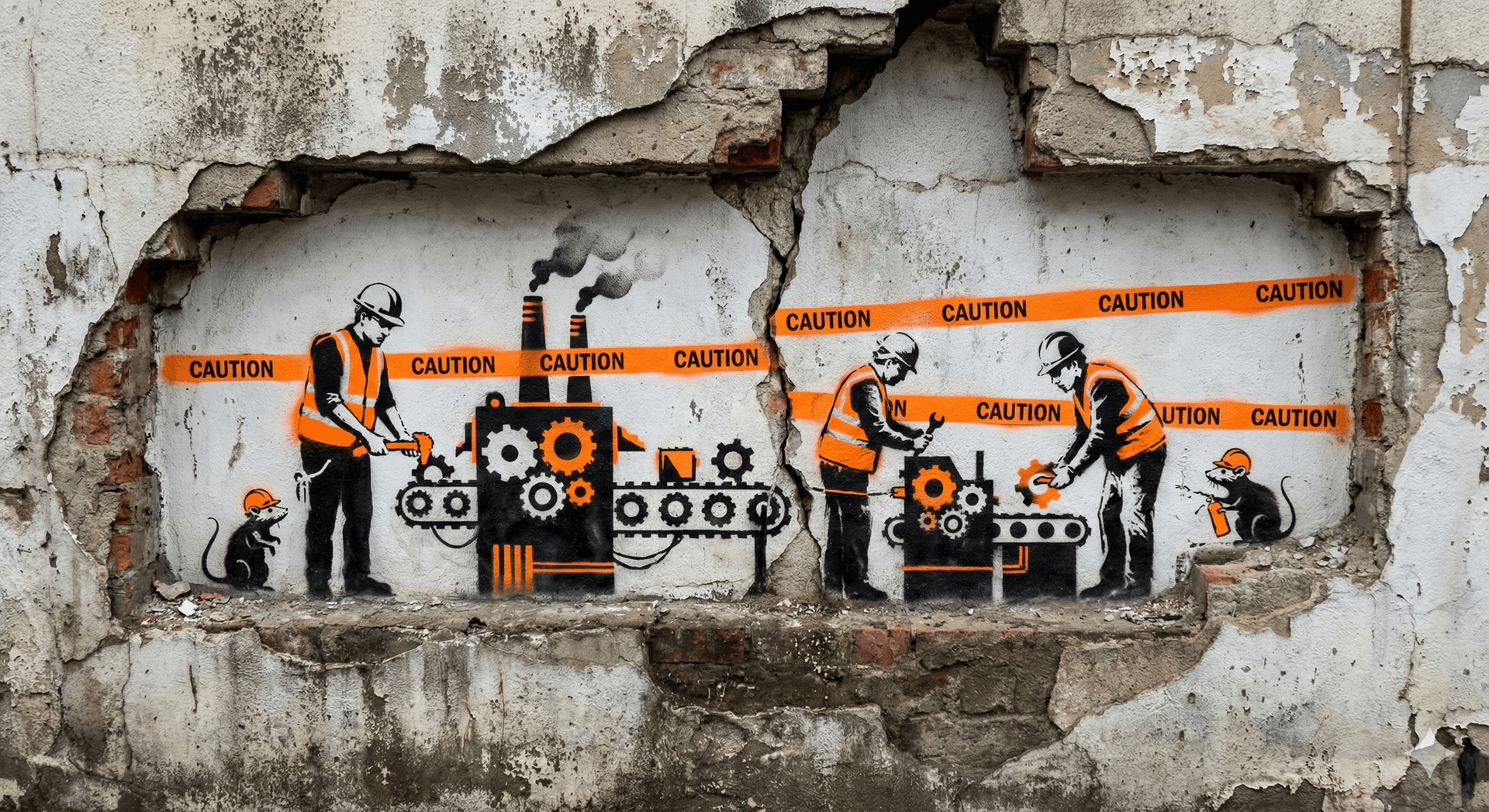
We understand the unique pain points facing Australian manufacturing & logistics businesses
Production scheduling conflicts causing delays and inefficiency
Manual inventory tracking leading to stockouts or excess holding costs
Equipment downtime unexpectedly disrupting production schedules
Quality control requiring manual inspection and documentation
Supply chain visibility limited across suppliers and logistics
Order management and customer communication time-consuming
Resource allocation and capacity planning done with spreadsheets
Compliance documentation and reporting overwhelming small manufacturers
AI agents that take on repetitive work around the clock, with your team kept in control
Sensor-driven system that looks for early signs of equipment failure, helps schedule maintenance, and reduces surprise breakdowns
What it helps with:
Can reduce unplanned downtime by moving repairs into planned maintenance windows
Scheduling system that balances production runs, resource allocation, and delivery commitments
What it helps with:
More realistic schedules, quicker re-planning when disruptions occur, and better visibility of delivery dates
System that forecasts demand, recommends inventory levels, manages suppliers, and helps prevent stockouts
What it helps with:
Can lower excess stock and stockouts, freeing up working capital
Computer vision and AI system that assists quality inspection, tracks defects, and keeps inspection records
What it helps with:
More consistent inspection at line speed, with records ready for customer and ISO 9001 audits
Streamline your operations with intelligent automation
Automated order processing, production tracking, delivery notifications, and customer portal for real-time visibility.
Time
Order admin and status calls
Impact
Customers see order status themselves
AI-optimised picking routes, automated shipping documentation, freight planning, and delivery tracking.
Time
Dispatch paperwork
Impact
More efficient picking and freight
Automated OEE tracking, production reports, inventory dashboards, and management analytics from real-time data.
Time
Manual reporting
Impact
Clearer view of efficiency gaps
Automated RFQs, supplier performance tracking, purchase order generation, and invoice reconciliation.
Time
Procurement admin
Impact
Better data for supplier negotiations
AI and digital solutions for manufacturing & logistics businesses
AI systems that support production planning, maintenance, and day-to-day operations
Benefits:
Custom ERP, MES, and WMS platforms with AI integration
Benefits:
Improve visibility for B2B manufacturing services and attract qualified buyers
Benefits:
Professional B2B websites showcasing capabilities and generating RFQs
Benefits:
The practical outcomes these systems are designed to deliver for manufacturing & logistics businesses
Early warnings let maintenance happen in planned windows rather than mid-shift
Schedules are rebuilt in minutes when orders, materials, or machines change
Demand forecasts and reorder points help balance stock against service levels
Realistic schedules give customers more reliable delivery dates
Inspections and defects are logged by machine, batch, and shift
Dashboards replace manual spreadsheet reports for OEE and inventory
Everything you need to know about AI automation for manufacturing & logistics
AI helps manufacturers and logistics companies make better use of the data they already collect. Predictive maintenance monitors equipment sensors such as vibration, temperature, and pressure to flag early signs of failure, so repairs can be planned rather than handled as emergencies. Production planning AI builds schedules that account for machine capacity, labour, materials, and delivery commitments, and re-plans quickly when something changes. Supply chain and inventory AI forecasts demand, recommends reorder points and safety stock, and automates purchase orders.
Computer vision can assist quality inspection and keep detailed records. For manufacturers, distributors, and logistics providers in Sydney, Melbourne, Brisbane, Perth, Adelaide, and regional Australia, the practical outcome is less firefighting, better visibility of operations, and more time for improvement work.
Predictive maintenance uses sensors and machine learning to spot patterns that often come before an equipment failure. It monitors parameters such as vibration (bearing wear or misalignment), temperature (cooling problems), hydraulic or pneumatic pressure, motor current draw, and cycle time drift, and combines them with your maintenance history. When readings move outside normal patterns, the system alerts your maintenance team so the repair can be scheduled into a planned shutdown, low-production period, or weekend instead of stopping the line unexpectedly. It connects to equipment through retrofit sensors, SCADA systems, or OEM telemetry.
How much it helps depends on your equipment, data quality, and the cost of downtime on the lines involved, so we usually start with a pilot on your most critical machines.
Yes. Production scheduling involves many constraints at once, which is where spreadsheets tend to break down. Our Smart Production Planning AI builds schedules that balance machine capacity across lines, labour availability including skills, shifts, and leave, material availability and supplier lead times, changeover and setup times, and customer delivery priorities. When a machine goes down, a rush order arrives, or materials are delayed, it can re-plan quickly and show the knock-on effect on delivery dates.
It also supports what-if scenarios for capacity planning and gives real-time visibility of production status and bottlenecks. The system connects with your ERP, MES, and shop floor data collection where integration is available. It is most useful for make-to-order or mixed-model manufacturers with tight delivery commitments and constrained capacity.
Cost depends on the problem being solved, the equipment and systems involved, and whether new hardware is needed. Predictive maintenance and computer vision quality control usually involve sensors, cameras, or lighting as well as software, while production planning or inventory optimisation may only need integration with your existing ERP. The main cost drivers are the number of lines or sites, data availability and quality, integrations, hardware, and ongoing support. We provide a written quote after a free consultation, and we often recommend starting with a focused pilot on one high-impact problem, such as downtime on a critical machine.
That lets you measure results against your own baseline before committing to a wider rollout.
Supply chain AI helps manufacturers and distributors keep the right stock in the right place. Our AI Supply Chain & Inventory Optimiser analyses historical sales, seasonal patterns, and market indicators to forecast demand, recommends reorder points and safety stock for each SKU based on lead-time variability and your service targets, and can generate purchase orders automatically. It tracks shipments using carrier data and alerts you to delays, balances stock across multiple warehouses, and identifies slow-moving inventory. It can account for Australian factors such as long import lead times, freight costs, and seasonal demand.
It is most valuable for businesses with many SKUs, multiple suppliers, expensive raw materials, or promotional spikes, where manual planning struggles to keep up. Forecasts are only as good as the data behind them, so we review your data first.
AI can make inspection more consistent and documentation easier. Computer vision cameras on the production line check for dimensional variations, surface defects, colour inconsistencies, assembly errors, and contamination, classify defects by type and severity, and alert operators or trigger rejection in real time. Every inspection is recorded, so you can trace issues by machine, material batch, shift, or operator and run root cause analysis. These records support ISO 9001 audits, relevant Australian Standards, and customer quality requirements, though meeting those standards remains your quality team's responsibility.
Suitable applications include food and beverage inspection, metal fabrication, electronics assembly, packaging checks, and automotive parts. Performance depends on lighting, product variation, and training data, so we test on your products before rollout.
Australian manufacturers and logistics companies adopting AI typically build up a set of connected tools: predictive maintenance for critical equipment, production planning and scheduling, demand forecasting and inventory optimisation, computer vision quality control, warehouse management with optimised picking, and freight planning. The biggest gains usually come from connecting these tools so data flows from forecasting to production to delivery without manual re-entry. Many businesses start with the problem that costs them the most, whether that is downtime, late deliveries, or excess stock, and expand once the first system is working. This approach suits mid-size manufacturers competing with imports, contract manufacturers serving demanding clients, and logistics providers competing on service across Sydney, Melbourne, Brisbane, Perth, and Adelaide.
AI helps logistics companies plan and adjust freight operations. Route optimisation considers traffic, delivery windows, vehicle capacity, driver hours, and fuel costs to plan efficient runs. Load planning packs shipments by dimensions, weight, fragility, and delivery order to make better use of each vehicle. Dynamic routing adjusts plans during the day for traffic, breakdowns, or urgent pickups, and freight matching can pair available cargo with carrier capacity to reduce empty backhauls.
Automation also handles shipping documentation, proof of delivery, and invoicing, while customers receive accurate ETAs and proactive updates. Heavy vehicle driver hours still need to follow fatigue management rules under the Heavy Vehicle National Law. These tools suit 3PL providers, last-mile delivery companies, long-haul operators, and distribution centres serving metro and regional Australia.
Examples of related work from our portfolio
AI-first project management platform for a manufacturer, with a voice AI agent, NetSuite integration, and smart notifications
View Project→
Project management system for construction with AI-assisted forecasting and planning
View Project→
Gmail-integrated AI system that matches cargo slots with client requests for logistics brokers
View Project→We work with businesses in major Australian cities and regional areas
Book a free consultation and get an AI automation roadmap for your Australian manufacturing or logistics business, focused on downtime, planning, and inventory.
Get Your Free Consultation→