
Claude cannot hear your edit. Here is what Openverse, Earshot and Real SFX actually do

On this page · 8 sections
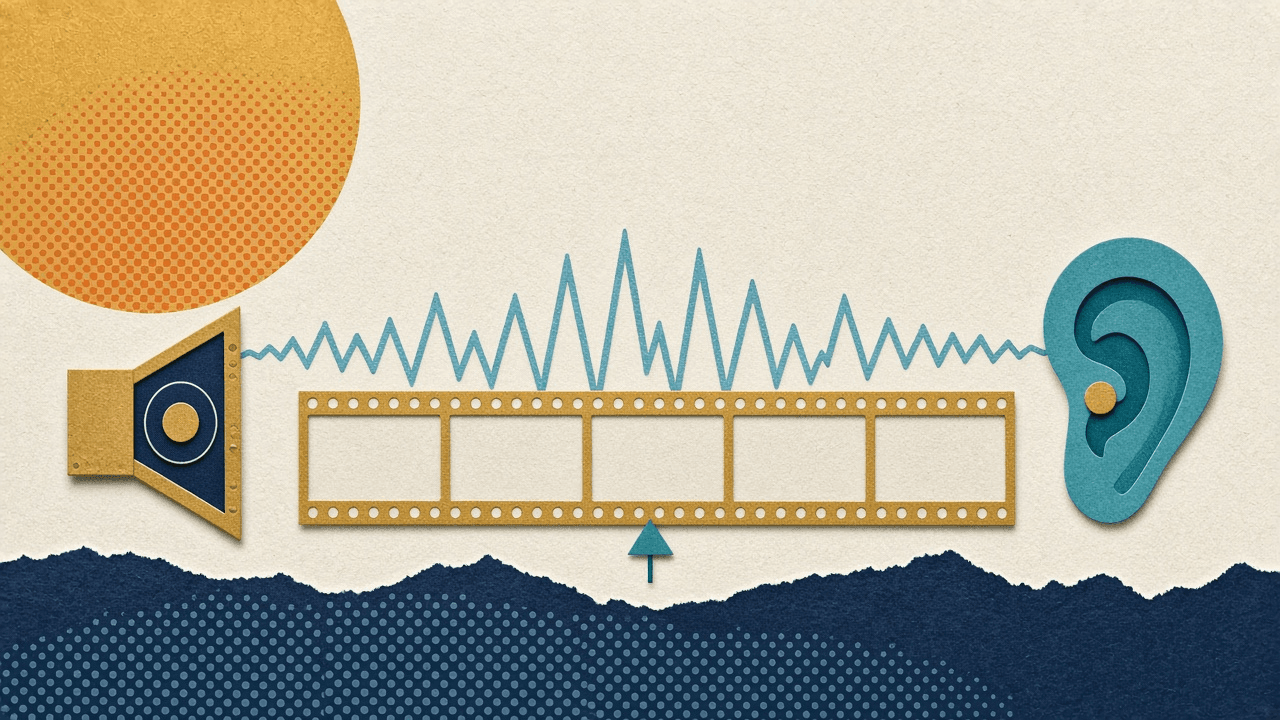
Claude Code is Anthropic's coding app in the terminal. It can write the code that renders a film. The earshot README is blunt about what comes next: "They still cannot hear what they made." Clipwing's Real SFX skill file says the same thing in three words: "You cannot hear." Sound is read as numbers, words and pictures.
A skill is a saved pack of instructions, usually a SKILL.md file and sometimes scripts. We covered how those packs work in our post on Claude Code skill packs. We're AI Lab Australia, a Sydney AI agency. We have not installed these three tools on a client's project. The facts below come from official pages, the Openverse API, and the public repos, which we re-read on 16 November 2026. Treat the numbers as a snapshot.
Openverse: find an openly licensed recording
Openverse is a free search engine for openly licensed and public-domain images and audio. It is the successor to Creative Commons Search, and it is now a WordPress project. The audio index includes music and other recordings, not only sound effects. Claude does not search Openverse by default.
A program can search it through the public application programming interface (API), a way for a program to query the site. Openverse's API client documentation says requests can proceed anonymously if you do not supply credentials. Results include licence fields.
On 16 November 2026 we queried the official audio stats endpoint. The index held 644,709 files from Jamendo, 3,986,828 from Wikimedia Commons and 591,898 from Freesound, a total of 5,223,435 audio files. That is more than five million audio files, not five million sound effects.
Openverse does not verify licensing information for individual works. Its about page tells you to check the source before you reuse anything. Licences vary. Creative Commons Zero (CC0) is a public-domain dedication. Creative Commons Attribution (CC BY) needs credit. Creative Commons Attribution-NonCommercial (CC BY-NC) blocks most commercial reuse.
Earshot: describe, check, and make sounds in code
Earshot, by Leon Lin, is a local tool that runs on the computer's main processor (CPU). The code is under the MIT licence, a common free software licence that allows commercial use (copyright 2026, in the LICENSE file). You can play the shipped bank on the demo site.
It turns sound into evidence a coding helper can reason about: a description in words, a match score, the best moment in a long file, a listening transcript, and a scorecard. It also makes sounds in code, with the earshot forge command, and ships a bank of 252 code-made effects, with the earshot sfx command. It can run as a command-line tool, a Python API, or a Model Context Protocol (MCP) server for Claude Code and other agents. MCP is a hook that lets a helper call a tool. It is not built into Claude. Read the README before you load it.
Real SFX: place a real recording on the exact frame
Real SFX is a public Claude Code skill from Clipwing. The files live in the Clipwing/skills repository, under skills/real-sfx. It sound-designs a motion video with real recorded sounds from your own library.
It finds moments from a cue list, a HyperFrames project, a screen recording (typing, toasts, scrolls, clicks) or the picture itself. It places each sound on the exact frame, at the level the author's own sounds had, keeps the music and voice, and returns a new MP4 video plus a separate sound-effects (SFX) WAV file. It needs Python 3.9 or newer and FFmpeg, a tool for processing audio and video.
It will not invent a full sound library for you. It ships with 78 CC0 user-interface (UI) sounds for interface moments. The skill file calls that pack the one documented exception to "sound is never synthesized," and notes that the pack was itself synthesized. You add a library for the rest. It does not pull files straight from Openverse. Openverse can be a source you search first, if you check each licence. The GitHub repository does not publish a project licence file, so do not assume MIT or any other grant for the skill itself.
The catches
"Free" means the public tools and skill files. Claude Code, or a similar helper, is often a paid plan, and a long job still burns tokens (the chunks of text the model reads and writes).
The three tools are complementary, not one official bundle. Use the public links in this post, not a forwarded chat message. Openverse licences vary, and Openverse does not verify each one: check the source page. A small CC0 UI pack is not a substitute for whooshes, hits, foley or rooms you have the rights to use.
These tools will not make an edit sound professional on their own. You still have to listen to the finished edit. Real SFX tells the helper not to present a pick as if it had listened, and to name the moments you should check by ear. Read the skill file or README before you load anything, and check the helper's work. We have not independently audited these tools for safety.
How they can work together
One way they can fit together: search Openverse for a recording and confirm the licence on the source page; use Earshot to describe, compare or generate a code-made take; then point Real SFX at a library you have the rights to use, and let it place those recordings on the frame.
That is a possible workflow, not an official pipeline. When it finishes, listen to the result yourself.
FAQ
Can Claude hear the soundtrack of a video it cuts?
No. The earshot README says agents "still cannot hear what they made." The Real SFX skill file says "You cannot hear." You still have to listen at the end.
Are Openverse, Earshot and Real SFX one official product?
No. They are three public tools that cover different parts of the job. They are not published as one official product or pipeline.
Does "free" cover Claude Code as well?
No. "Free" here means the public Openverse search, the earshot code, and the public Real SFX skill files. Claude Code or a similar helper is often a paid plan.
Will Real SFX build a sound library for me?
No. It places real recordings from a library you provide. It ships 78 CC0 UI sounds for interface moments. For the rest, you bring files you have the rights to use.
Want a straight read on a sound workflow before you put it on a client film?
If you want a second look at how your team sources, licences and places sound in AI-cut videos, email info@ailabaustralia.com with the helper and tools you already use.
Email info@ailabaustralia.com →
Sources
- Openverse, About and audio stats endpoint, checked 16 November 2026.
- Openverse, API client documentation, checked 16 November 2026.
- Leon Lin, earshot, LICENSE and demo site, checked 16 November 2026.
- Clipwing, Real SFX catalog page, skills repository and real-sfx SKILL.md, checked 16 November 2026.

WRITTEN BY
Roman Silantev
CEO and Lead AI Engineer. Scopes and builds AI systems for Australian businesses.
 ← PREVIOUSClaude Code Skills: Five Public Packs, What They Actually Do, and What to Check First
 NEXT ARTICLE →App legal checklist for Australia: what Claude can fix, and what it cannot
Keep reading in Tools & models
All articles →Claude Code Skills: Five Public Packs, What They Actually Do, and What to Check First10 MIN READ Ponytail for Claude Code: What 'Half the Tokens' Really Measures, and How to Install Agent Skills Safely10 MIN READ
 Subframe Motion for Australian React Teams: 310 Free Animations Your Coding Agent Can Search9 MIN READ