December 22, 2025, marked the day the AI Honeymoon ended. From Nvidia's H200 chip exports to GPT-5.2-Codex and Agentic AI, discover what these global shifts mean for Australian businesses in 2026.


Date: December 23, 2025 | Category: Artificial Intelligence, Business Strategy, Australian Tech Markets | Reading Time: 8 Minutes
December 22, 2025, will be remembered as the day the "AI Honeymoon" ended and the Intelligence Economy truly began. From the trading floors of the ASX to the boardrooms of Sydney, the shockwaves of new US trade policies, the release of GPT-5.2-Codex, and the rise of Agentic AI are redefining the operational landscape.
For Australian business leaders, the landscape has shifted from speculative excitement to operational necessity. This post breaks down the Global AI Strategic Intelligence Report, specifically tailored for the Australian market context.
The biggest news driving the "Santa Claus Rally" globally is the US Department of Commerce's review of Nvidia's H200 AI chip exports.
The Trump Administration's proposal to allow these sales—subject to a massive 25% tariff—is a geopolitical gamble. For Australian businesses, this signals a shift from "decoupling" to "transactional entanglement."
As the US and China engage in this new "tariff-for-tech" dynamic, Australian supply chains relying on Chinese manufacturing for electronics may face ripple effects. Companies in Sydney, Melbourne, and Brisbane need to prepare for potential disruptions.
The surge in semiconductor stocks (like Tokyo Electron and Advantest) suggests that infrastructure spending is not slowing down. Australian investors should look at:
Key Trend: The "China Price" is coming to AI. Just as manufacturing moved to China for lower costs, we are seeing a surge in US firms using Chinese open-source models (like Alibaba's Qwen) to save costs.
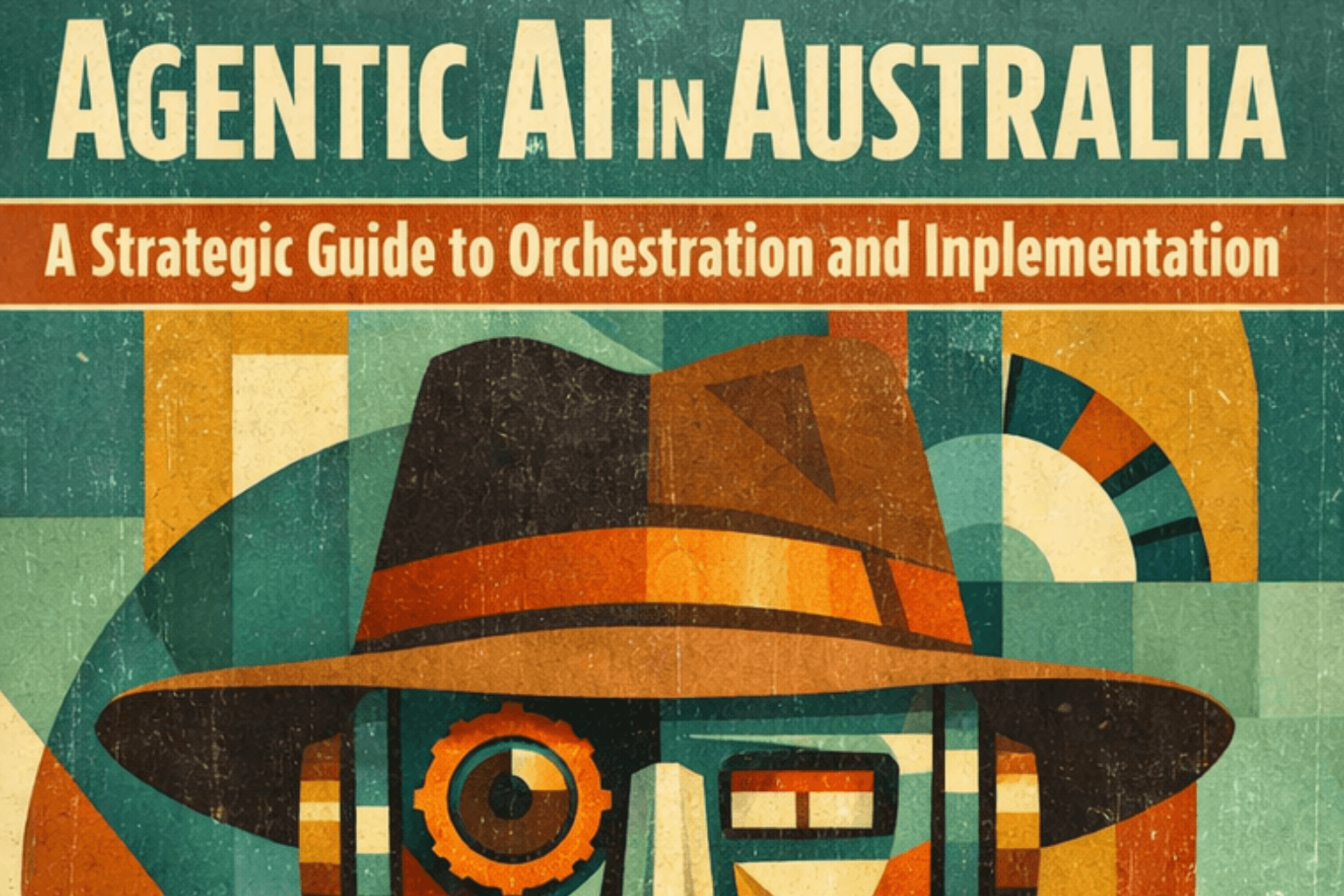
December 2025 marks the maturity of Agentic AI—systems that don't just chat, but do.
The release of GPT-5.2-Codex has commoditized software engineering. This model is optimized for "long-horizon work," meaning it can:
Perhaps the most disruptive trend for Australian SMBs is "Vibe Coding." Platforms like Lovable (now valued at $6.6 billion) allow founders to build full-stack apps simply by describing the "vibe" and functionality—no code required.
Democratization: You no longer need a $50k budget for an MVP. You can "vibe code" a prototype in a weekend. This levels the playing field for startups in Perth, Adelaide, Brisbane, Sydney, and Melbourne.
The Risk: "Shadow IT" is exploding. Employees might be building unapproved apps to process company data. Australian privacy laws (Privacy Act reforms) are strict—ensure your AI governance covers these tools.
Action Item: Conduct an AI tool audit across your organization. Many Australian businesses are unknowingly using non-compliant AI tools.
While the EU is tightening the screws with the EU AI Act, the US is moving toward aggressive deregulation under the new Trump Executive Order (EO). The EO seeks to preempt state-level safety laws (like Colorado's AI Act) to remove "ideological bias."
Australia generally favors a "high-standard" approach similar to the EU (though distinct). Australian exporters targeting the US market now face a dilemma:
Stick to the "Highest Common Denominator." Complying with high safety standards protects your brand reputation locally, even if the US market deregulates.
Australian businesses serving both markets should:
Not all AI is in the cloud. The launch of Tiiny AI's Pocket Lab proves that Edge AI is ready for prime time. This device allows for sovereign, offline AI processing—crucial for Australian data sovereignty requirements.
Run powerful diagnostics on equipment in the Pilbara without needing internet connectivity. Process geological data on-site while maintaining complete data sovereignty.
Process sensitive patient data locally without breaching data sovereignty laws. Perfect for regional Australian healthcare providers in remote areas.
Smart farming AI that works in areas with limited connectivity across rural NSW, Queensland, Victoria, and Western Australia.
Process classified or sensitive data without cloud dependency, ensuring compliance with Australian government security requirements.
Based on the intelligence from December 22, 2025, here is your action plan:
Survey your staff. Are they using "Vibe Coding" tools? Implement an AI Sandbox immediately. This is critical for Australian businesses to maintain compliance with Privacy Act reforms.
Do not rely on a single hardware source. The H200 export review shows that chip availability can change overnight based on political whims. Australian businesses should:
Telecommunications giants are slashing jobs (Verizon, Telstra peers) in favor of AI agents. Retrain your workforce to be "AI Supervisors," not just operators.
Australian Context: With record-low unemployment, this is an opportunity to upskill rather than downsize. Government training programs are available.
The Starbuck v. Google case regarding AI hallucinations is critical. If AI providers lose protections, your business could be liable for your chatbot's advice.
Risk Management:
This section is optimized to answer common queries regarding the December 2025 AI shifts for AI Overviews and Voice Search.
Vibe Coding refers to creating software applications using natural language prompts rather than writing traditional code syntax. It is driven by platforms like Lovable and Replit.
Yes, it is available globally, including in Australia, and is becoming a popular tool for Sydney, Melbourne, Brisbane, Perth, and Adelaide startups to reduce development costs from $50,000+ to under $5,000.
The Trump AI Executive Order (December 2025) aims to deregulate AI in the US and preempt state laws. For Australian companies exporting digital services to the US, this creates a "compliance gap."
While US federal rules may become laxer, Australian companies should continue to adhere to stricter domestic or EU-aligned standards to manage reputational risk and liability. The Australian government is likely to maintain high standards regardless of US deregulation.
Yes. GPT-5.2-Codex, released in late 2025, features "Context Compaction," allowing it to handle much larger projects without "forgetting" instructions.
It is specifically optimized for:
This makes it significantly more capable for business automation and software development than GPT-4, with particular benefits for Australian businesses managing complex operations.
The primary risks are Hallucination Liability and Data Sovereignty.
As seen in the Starbuck v. Google case, businesses may be sued if their AI agents provide false or defamatory information. Australian businesses face additional risks under consumer protection laws and the Australian Consumer Law (ACL).
Using cloud-based agents may move sensitive Australian customer data to US servers, potentially conflicting with local privacy regulations. Edge AI solutions (like Tiiny AI) are recommended for sensitive data to maintain Australian data sovereignty.
Yes. The commoditization of coding via models like GPT-5.2 and "Vibe Coding" platforms is expected to collapse the cost of routine software tasks by 60-80%.
However, costs may shift toward:
For Australian businesses, this means MVPs that cost $50,000 in 2024 might cost $10,000-15,000 in 2026.
Australian businesses should focus on upskilling rather than replacing workers:
The Australian job market in 2026 will favor those who can work with AI rather than compete against it.
The Intelligence Economy is here. Whether you're a startup in Sydney, a mining company in Perth, a healthcare provider in Brisbane, or a professional services firm in Melbourne, 2026 will be defined by how quickly you adapt to these shifts.
At AI Lab Australia, we specialize in helping Australian businesses navigate the Intelligence Economy:
Ready to navigate the AI Pivot Point? Contact us for a free consultation on how to position your Australian business for success in 2026.
Serving Sydney, Melbourne, Brisbane, Perth, Adelaide, and businesses across Australia.
About AI Lab Australia
AI Lab Australia is an AI automation and consulting agency listed on the National AI Centre's AI Directory. We provide practical AI solutions for Australian businesses across all industries.
📞 Get in touch for a free AI readiness assessment and discover how to turn these global AI shifts into competitive advantages for your Australian business.
Get expert guidance on implementing ai consulting solutions for your Australian business