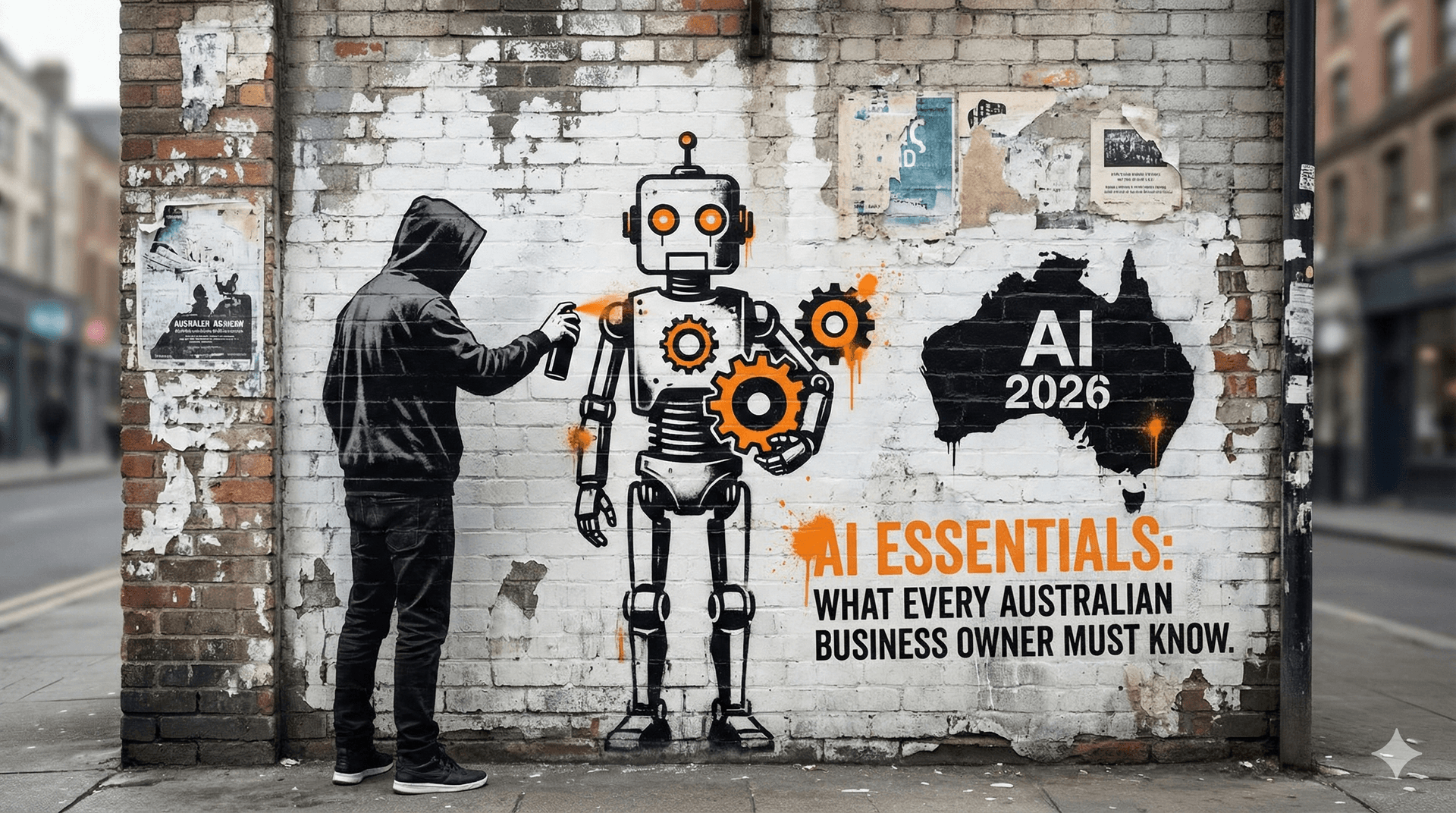
AI Essentials: What Every Australian Business Owner Must Know in 2026
If you're an Australian business owner feeling overwhelmed by AI, you're not alone. Between the hype, the jargon, and the constantly changing landscape, it's easy to feel lost.
This guide cuts through the noise and gives you the essential knowledge you need to make smart AI decisions for your business.
The Fundamentals: What AI Actually Is (In Plain English)
AI Is Not Magic
At its core, AI is sophisticated pattern recognition powered by massive amounts of data and computing power.
Think of it like this:
- You train a dog by showing it examples: "Good dog!" when it sits
- AI learns the same way: show it 10,000 examples and it learns the pattern
What this means for you:
- AI gets better with more data
- AI is only as good as what it's trained on
- AI doesn't "understand"—it recognizes patterns
The Three Types of AI Every Business Owner Should Know
Type 1: Rule-Based AI (Traditional Automation)
- Follows pre-programmed rules: "If X happens, do Y"
- Example: "If customer asks about hours, respond with opening times"
- Best for: Simple, repetitive tasks with clear rules
Type 2: Machine Learning AI
- Learns patterns from data without explicit programming
- Example: "Predict which customers are likely to churn based on behavior"
- Best for: Making predictions, finding patterns, optimization
Type 3: Generative AI (ChatGPT, Claude, etc.)
- Creates new content: text, images, code, audio
- Example: "Write personalized email responses based on context"
- Best for: Content creation, communication, creative tasks
Most Australian businesses use a combination of all three.
What AI Can Actually Do for Your Business
Customer Service and Support
Realistic capabilities:
- Answer 70-80% of common customer questions instantly
- Route complex queries to the right human team member
- Provide 24/7 support without hiring night shift staff
- Reduce response time from hours to seconds
Real Australian example: A Sydney legal firm's AI chatbot handles initial client inquiries, qualifying leads and booking consultations. Result: 3x more qualified leads without adding reception staff.
Sales and Marketing
Realistic capabilities:
- Personalize marketing messages for different customer segments
- Predict which leads are most likely to convert
- Automate follow-up sequences that feel personal
- Generate content drafts (emails, social posts, ad copy)
Melbourne retailer case: AI analyzes customer browsing behavior and sends personalized product recommendations. Conversion rate increased 43%.
Operations and Efficiency
Realistic capabilities:
- Automate data entry and document processing
- Predict inventory needs and optimize stock levels
- Schedule staff based on predicted demand patterns
- Generate reports and insights from business data
Brisbane warehouse example: AI predicts peak times and automatically adjusts staffing schedules. Labor costs down 18%, fulfillment speed up 31%.
Financial Management
Realistic capabilities:
- Automate invoice processing and payment reconciliation
- Flag unusual transactions for fraud detection
- Forecast cash flow with 85%+ accuracy
- Categorize expenses automatically
Perth accounting firm: AI processes 90% of routine bookkeeping, freeing accountants for strategic tax planning and advisory work.
What AI Cannot Do (Despite What You've Heard)
AI Cannot Replace Strategy
AI can analyze data and provide insights, but it can't:
- Understand your company's vision and values
- Navigate complex stakeholder relationships
- Make judgment calls that require wisdom and experience
- Decide what your business should stand for
Bottom line: You're still the CEO. AI is your analyst, not your strategist.
AI Cannot Replace Human Connection
AI can draft emails, but it cannot:
- Build genuine trust with clients
- Navigate sensitive negotiations
- Provide empathy in crisis situations
- Create deep, lasting business relationships
Truth: The more AI handles routine interactions, the more valuable genuine human connection becomes.
AI Cannot Think Creatively (Yet)
AI can recombine existing ideas, but it struggles with:
- Truly original innovations
- Understanding cultural nuance and context
- Creating breakthrough brand strategies
- Developing disruptive business models
Reality: AI is a creative assistant, not a creative director.
The Money Talk: What AI Actually Costs
Budget Breakdown for Australian SMEs
Small Business (5-20 employees):
- Monthly software costs: $200-1,000
- Initial setup: $3,000-15,000
- Training: $2,000-5,000
- Maintenance: $500-2,000/month
Expected ROI: 200-400% within 12 months
Medium Business (20-100 employees):
- Monthly software costs: $1,000-5,000
- Initial setup: $15,000-75,000
- Training: $5,000-20,000
- Maintenance: $2,000-8,000/month
Expected ROI: 300-600% within 18 months
Large Enterprise (100+ employees):
- Monthly software costs: $5,000-50,000+
- Initial setup: $75,000-500,000+
- Training: $20,000-100,000+
- Maintenance: $8,000-50,000+/month
Expected ROI: 400-800% within 24 months
Hidden Costs to Budget For
- Data preparation: Clean data is essential (often 30% of project cost)
- Change management: Training and adoption support (20% of budget)
- Integration: Connecting AI with existing systems (15-25% of budget)
- Ongoing optimization: Continuous improvement (10-15% annually)
How to Choose the Right AI Solutions
Step 1: Identify Your Biggest Pain Points
Ask yourself:
- What tasks consume the most time?
- Where do we lose customers due to slow response?
- What decisions do we make with incomplete data?
- Which processes have the most errors?
Choose the top 3 pain points. These are your AI priority targets.
Step 2: Calculate Potential ROI
Simple formula:
- Current cost of doing task manually (time × wage + error costs)
- AI cost (software + setup + maintenance)
- Savings = Current cost - AI cost
- ROI = (Savings ÷ AI cost) × 100
Example:
- Customer service costs: $80,000/year (2 staff)
- AI solution costs: $25,000/year (including setup)
- Savings: $55,000/year
- ROI: 220%
Rule of thumb: If ROI isn't at least 200% within 18 months, reconsider.
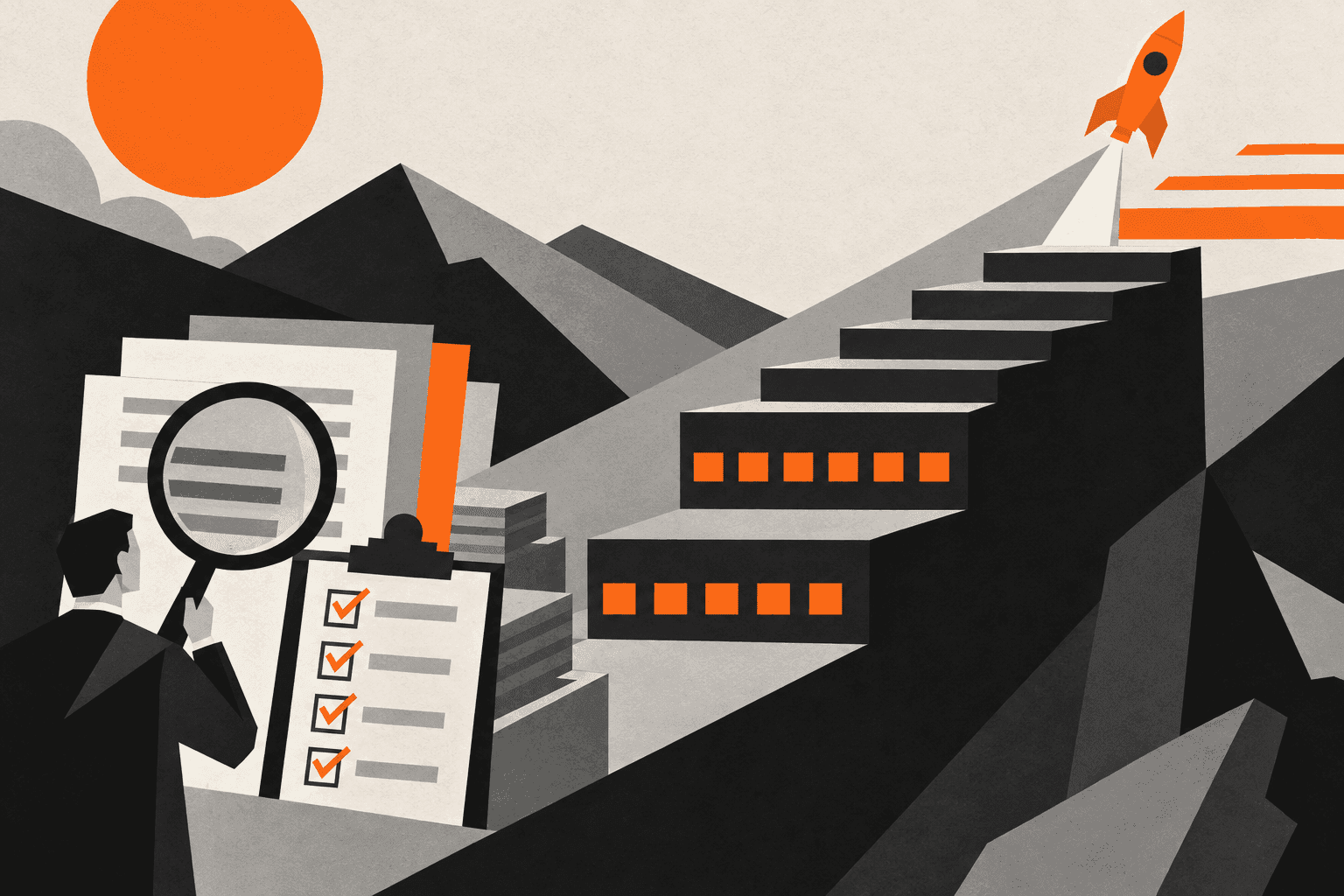
Step 3: Start Small, Scale Smart
Best practice approach:
- Pilot (Month 1-2): Test AI with one team or process
- Measure (Month 3): Track results rigorously
- Optimize (Month 4-6): Refine based on feedback
- Scale (Month 6+): Expand to additional areas
Don't try to transform your entire business at once. Even large companies start with pilots.
Common Mistakes (And How to Avoid Them)
Mistake #1: Buying Tools Before Defining Problems
What happens: You buy expensive AI software that doesn't solve actual business problems.
How to avoid it: Always start with the problem, not the tool. Define success metrics before shopping for solutions.
Mistake #2: Expecting Perfection
What happens: You get frustrated when AI isn't 100% accurate and abandon it.
How to avoid it: Remember, AI doesn't need to be perfect—it just needs to be better than the current process. 80% accuracy that works 24/7 often beats 95% accuracy that requires expensive human labor.
Mistake #3: Neglecting Data Quality
What happens: AI trained on messy data produces messy results.
How to avoid it: Budget time and money for data cleaning. It's not sexy, but it's essential. Expect to spend 30% of your AI project timeline on data preparation.
Mistake #4: Ignoring Your Team
What happens: Staff resist AI adoption, worried about job security or overwhelmed by change.
How to avoid it: Involve your team early. Frame AI as a tool that handles boring work so they can focus on interesting, high-value tasks. Provide training and support.
Mistake #5: Going It Alone
What happens: You waste months testing tools, making costly mistakes, and getting frustrated.
How to avoid it: Work with Australian AI consultants who understand local regulations, business culture, and industry-specific needs. You'll save time, money, and headaches.
AI and Australian Regulations: What You Need to Know
Privacy and Data Protection
Key requirements:
- Australian Privacy Principles (APPs) apply to AI systems
- You must disclose when customers are interacting with AI
- Customer data used for AI training must be protected
- You need consent for certain data uses
Best practice: Work with AI providers who are Australian-based or fully APP-compliant.
Consumer Protection
ACCC requirements:
- AI-generated marketing must not be misleading
- Automated pricing must comply with competition laws
- You're responsible for AI decisions, even if they're automated
Bottom line: You can't blame the AI if something goes wrong. You're accountable.
Employment and Workplace
Fair Work considerations:
- Consult with employees before implementing AI that affects their roles
- AI monitoring of employees must comply with privacy laws
- Be transparent about how AI is used in hiring decisions
Industry-Specific Regulations
Healthcare: AHPRA standards, medical device regulations
Legal: Professional responsibility for AI-assisted advice
Financial: APRA requirements, responsible lending obligations
Real Estate: Disclosure requirements, anti-discrimination rules
Always check your industry's specific regulations before deploying AI.
Building Your AI Knowledge (Without Going Back to School)
Essential Resources for Australian Business Owners
Free learning:
- LinkedIn Learning: "AI for Business Leaders"
- YouTube: "AI Explained" channel
- Podcasts: "AI in Business"
Paid courses ($500-2,000):
- UNSW AI for Business Certificate
- Melbourne Business School AI Strategy
- Monash AI Leadership Program
Local communities:
- AI & Machine Learning Sydney Meetup
- Melbourne AI Group
- Brisbane Tech Founders
Questions to Ask AI Vendors
- What specific problem does this solve for my business?
- What ROI have similar Australian businesses achieved?
- How long until we see measurable results?
- What data do you need from us, and is it secure?
- How does this integrate with our existing systems?
- What happens if it doesn't work—what's your guarantee?
- Are you compliant with Australian privacy laws?
- What ongoing support do you provide?
Red flags:
- Promises of 100% accuracy
- Guaranteed results without seeing your data
- Vague answers about compliance
- No Australian case studies or references
Your AI Action Plan: Next Steps
This Week
This Month
This Quarter
This Year
The Truth About AI for Australian Businesses
Here's what most consultants won't tell you:
AI won't save a broken business. If your fundamentals are wrong (bad product, poor service, weak positioning), AI will just help you fail faster.
But if you've got a good business, AI can be the multiplier that takes you from good to exceptional.
The businesses winning with AI in 2026:
- Started small with clear objectives
- Measured everything rigorously
- Kept humans in the loop for important decisions
- Viewed AI as a tool, not a magic solution
- Invested in their people, not just technology
Final Thoughts
You don't need to become an AI expert to benefit from AI.
You just need to understand enough to ask the right questions, make smart decisions, and avoid costly mistakes.
The Australian businesses thriving in 2026 share one thing:
They started. Not perfectly. Just started.
So start. Choose one problem. Test one solution. Measure the results.
Everything else is just details.
Ready to implement AI the right way for your Australian business? AI Lab Australia provides honest, practical AI consulting for businesses across Sydney, Melbourne, Brisbane, and nationwide. We cut through the hype and focus on solutions that deliver measurable ROI.
Book a free AI assessment and we'll identify your highest-impact opportunities.